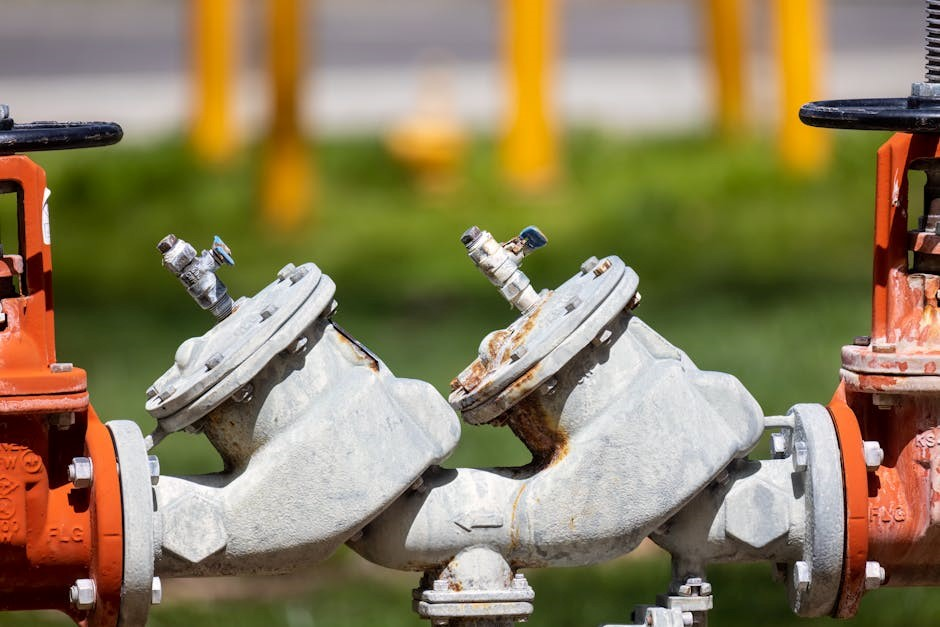
Valve Manual: A Comprehensive Guide
This comprehensive guide details valve types, applications, and selection, ensuring safe and efficient fluid flow in diverse industrial processes and piping systems.
Valves represent essential components within process and piping systems, fundamentally controlling the commencement, cessation, regulation, or redirection of fluid flow – encompassing liquids, gases, and slurries. Their significance spans numerous industries, including oil and gas, refining, and power generation, where they are critical for maintaining operational safety, efficiency, and reliability amidst fluctuating pressures and temperatures.
A diverse array of valve types and designs exists, each meticulously engineered for specific applications dictated by operational demands and technical specifications. Understanding these nuances is paramount for optimal system performance and longevity. This introduction lays the groundwork for a deeper exploration of valve fundamentals, their roles within complex systems, and the crucial material considerations that underpin effective selection processes.
What is a Valve?
A valve is fundamentally a mechanical device engineered to govern fluid flow – be it liquids, gases, or steam – by strategically opening, closing, or partially obstructing a passageway. This control is achieved through various mechanisms, dictating the degree of flow restriction and ultimately influencing system performance. Valves aren’t simply on/off switches; they offer nuanced control, enabling precise regulation of flow rates and pressures.
Their operation is crucial for a multitude of processes, from simple household plumbing to complex industrial operations. Understanding the core function of a valve is the first step towards appreciating the broader landscape of valve types and their specialized applications. Selecting the correct valve ensures efficient operation and contributes significantly to the overall longevity of any fluid handling system.
The Importance of Valve Selection
Valve selection is paramount to the safe, efficient, and reliable operation of any fluid system. Choosing the incorrect valve type can lead to reduced performance, increased maintenance costs, and even catastrophic failures. Operational needs and technical parameters must be carefully considered during the selection process, aligning the valve’s characteristics with the specific application.
Factors like fluid type, pressure, temperature, and flow rate all influence the optimal valve choice. A thorough understanding of these variables, coupled with knowledge of available valve types, is essential. Proper selection ensures longevity, minimizes downtime, and maximizes system efficiency. Ignoring these considerations can compromise the entire system’s integrity and operational effectiveness.
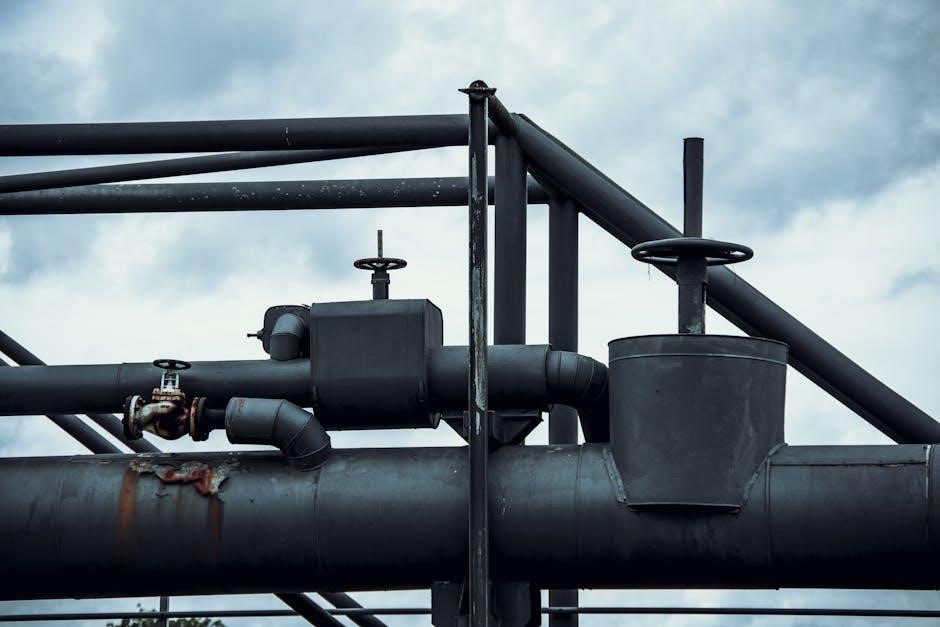
Valve Types: An Overview
Various valve types – gate, globe, check, plug, ball, and butterfly – each offer unique characteristics suited for diverse applications and operational demands.
Gate Valves
Gate valves are primarily employed for on-off service, meaning they are ideally suited for applications where fluids need to be either fully open or completely shut off. They achieve this through a gate that slides into and out of the flow path.
These valves are not designed for throttling or regulating flow, as partial opening can cause erosion of the gate and seat. Gate valves excel in scenarios requiring minimal pressure drop when fully open, making them a popular choice in pipelines and water distribution systems.
Commonly found in large-diameter pipelines, they offer robust performance and reliability. However, their relatively slow operation – requiring multiple turns to fully open or close – makes them less suitable for applications demanding rapid response times. Proper maintenance is crucial to ensure smooth operation and prevent leakage.
Globe Valves
Globe valves are characterized by their spherical body and internal baffle, offering excellent flow control capabilities. Unlike gate valves, they are suitable for throttling and regulating flow, making them versatile for applications needing precise adjustments. The fluid path changes direction within the valve, resulting in a higher pressure drop compared to gate valves.
This design makes them ideal for applications where frequent operation and precise flow control are essential, such as steam control, feedwater regulation, and cooling water systems. Globe valves are generally more expensive than gate valves due to their complex construction.
They are also prone to cavitation if not properly sized and operated. Regular inspection and maintenance are vital to prevent damage and ensure optimal performance. Different designs, like Y-pattern and angle globe valves, cater to specific application needs.
Check Valves
Check valves are crucial for preventing backflow in piping systems, ensuring unidirectional fluid movement. These valves operate automatically, opening when fluid flows in the desired direction and closing instantly to halt reverse flow. This self-acting feature enhances system safety and protects equipment from damage caused by backflow events.
Several designs exist, including swing, lift, and ball check valves, each suited for different applications and flow conditions. Swing check valves utilize a hinged disc, while lift check valves employ a disc that rises off the seat. Ball check valves use a ball to seal against the orifice.
Common applications include pump discharge lines, compressor systems, and preventing water hammer. Proper selection considers fluid type, pressure, and temperature to guarantee reliable operation and prevent premature failure. Minimal maintenance is typically required.
Plug Valves
Plug valves offer a simple yet effective method for controlling fluid flow, utilizing a cylindrical or conical “plug” with a bore. Rotating the plug 90 degrees aligns or misaligns the bore with the flow path, achieving quick on/off functionality. They excel in applications requiring frequent operation and minimal pressure drop.
These valves are particularly well-suited for handling slurries, viscous fluids, and fluids containing solids, as their design minimizes obstruction. Lubricated and non-lubricated versions are available, impacting torque requirements and sealing capabilities.
Common applications include gas and liquid pipelines, and chemical processing. Material selection is critical, considering fluid compatibility and operating conditions. Regular inspection and maintenance of the sealing surfaces are essential for leak-free performance.
Ball Valves
Ball valves employ a hollow, perforated, and pivoting ball to control flow; Rotating the ball a quarter-turn aligns the port with the flow path, allowing passage, or perpendicular to it, shutting off flow. This simple mechanism provides quick and reliable operation, making them widely popular across numerous industries.
They are known for their tight shut-off capabilities and low pressure drop when fully open. Ball valves are available in various materials and configurations, including two-piece, three-piece, and multi-port designs, catering to diverse application needs.
Common uses include water, oil, gas, and chemical applications. Selection considerations include the ball and seat materials, body construction, and actuation method (manual, pneumatic, or electric).
Butterfly Valves
Butterfly valves regulate flow using a rotating disc. This disc sits within the valve body and, when rotated, either allows or obstructs fluid passage. Their design is relatively simple, making them lightweight and cost-effective, particularly for larger diameter pipes.
They are well-suited for applications requiring frequent operation and offer a good balance between flow control and pressure drop. Butterfly valves are commonly used in water treatment, fire protection systems, and HVAC applications.

Material selection is crucial, considering the fluid being handled and operating temperatures. Common materials include stainless steel, cast iron, and PVC. Actuation can be manual, pneumatic, or electric, depending on the application’s requirements.

Valve Applications by Industry
Valves are essential across diverse sectors—oil & gas, power generation, refineries, and water treatment—ensuring process control, safety, and operational reliability.
Valves in Oil and Gas
Within the oil and gas industry, valves play a critical role in numerous applications, from upstream exploration and production to downstream refining and distribution. These valves must reliably control the flow of hydrocarbons, often under extreme pressures and temperatures, and in corrosive environments. Gate, globe, check, and ball valves are frequently employed for their specific strengths in these demanding conditions.
Specifically, gate valves are often used for on/off service where minimal pressure drop is required, while globe valves provide precise flow regulation. Check valves prevent backflow, safeguarding equipment and maintaining process integrity. Ball valves offer quick shut-off capabilities and are suitable for a wide range of fluids. Material selection is paramount, with alloys chosen for their resistance to corrosion and high-pressure tolerance, ensuring long-term operational safety and efficiency throughout the oil and gas value chain.

Valves in Power Plants
Power plants rely heavily on valves for controlling steam, water, and various gases throughout the energy generation process. These valves are integral to maintaining efficient and safe operation of boilers, turbines, and cooling systems. Critical applications include feedwater control, steam isolation, and regulating the flow of cooling water to condensers. Globe valves are frequently used for throttling steam flow, while gate valves provide reliable isolation.
Furthermore, check valves prevent backflow in critical systems, and ball valves offer quick shut-off capabilities during emergencies. Due to the high temperatures and pressures involved, valve materials must exhibit exceptional strength and corrosion resistance. Regular inspection and maintenance are crucial to ensure valve integrity and prevent costly downtime, contributing to the overall reliability of power generation facilities.
Valves in Refineries
Refineries utilize a vast array of valves to manage the complex processes involved in transforming crude oil into finished products. These valves control the flow of hydrocarbons, steam, and various chemical additives throughout distillation columns, cracking units, and blending operations. Precise flow control is paramount for optimizing yields and ensuring product quality. Ball valves and butterfly valves are commonly employed for on/off service, while globe and control valves regulate flow rates accurately.
Given the corrosive nature of many refinery fluids, valve materials must be carefully selected to withstand harsh conditions. Material selection considers fluid type, temperature, and pressure. Regular maintenance and inspection programs are essential to prevent leaks and ensure safe, reliable operation, minimizing environmental impact and maximizing operational efficiency within the refinery.
Valves in Water Treatment
Water treatment facilities rely heavily on valves to precisely control the flow of water and treatment chemicals throughout the various stages of purification. From intake structures to filtration systems and disinfection processes, valves play a critical role in delivering safe, potable water. Gate valves are often used for isolation, while butterfly valves handle large flow volumes efficiently. Check valves prevent backflow, safeguarding the integrity of the treatment process.
Due to the potential for corrosion and scaling, valve materials in water treatment must be resistant to chlorine, pH fluctuations, and other aggressive elements. Proper valve selection and maintenance are crucial for minimizing water loss, reducing energy consumption, and ensuring compliance with stringent regulatory standards. Regular inspections and preventative maintenance programs are vital for long-term reliability.
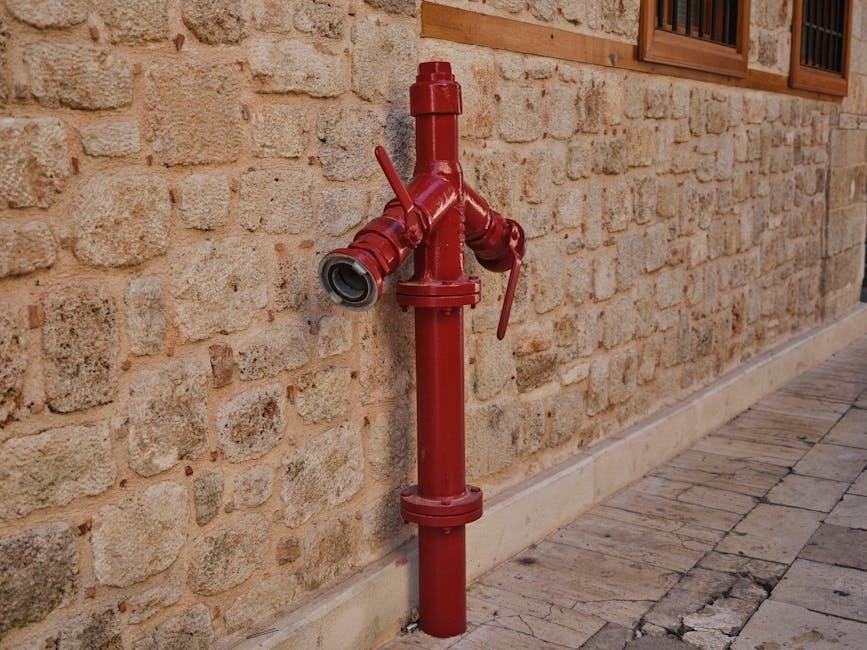
Valve Actuation Methods
Valve actuation encompasses manual, pneumatic, and hydraulic operations, utilizing actuators, limit switches, and solenoids for precise control and automated functionality.
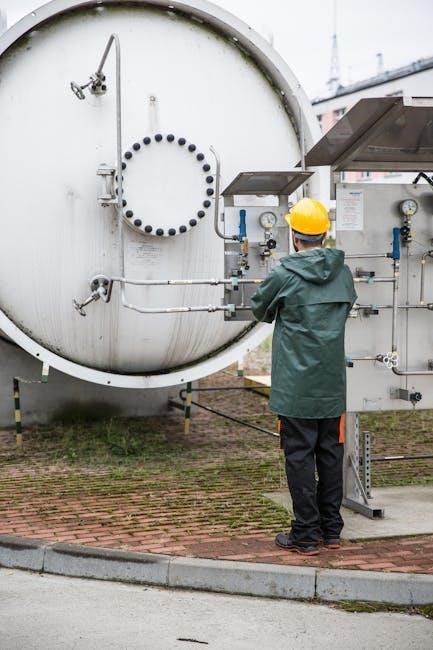
Manual Valve Operation
Manual valve operation represents the most fundamental method of flow control, relying directly on human intervention to position the valve’s internal components. Typically, this involves utilizing a handwheel, lever, or handle connected to the valve stem. Rotating the handwheel, for instance, translates into linear movement of the stem, opening or closing the valve passage.
This method is particularly suitable for applications where infrequent adjustments are needed, or where remote control isn’t a necessity. Manual operation offers simplicity and cost-effectiveness, eliminating the need for external power sources or complex control systems. However, it demands physical effort and isn’t ideal for rapidly changing process conditions or large-scale operations. The operator must be physically present and capable of applying the necessary force to overcome any fluid pressure or friction within the valve.
Proper training and understanding of the valve’s mechanism are crucial for safe and efficient manual operation, preventing damage to the valve or potential hazards to personnel.
Pneumatic Valve Actuation
Pneumatic valve actuation utilizes compressed air to provide the force needed for valve operation, offering a robust and reliable alternative to manual control. An actuator, connected to the valve stem, receives pressurized air, converting it into linear or rotary motion to open or close the valve. This method is favored for its speed and ability to handle larger valves compared to manual operation.
Pneumatic systems are well-suited for applications requiring frequent cycling or remote control, often integrated with automated control systems. They offer a cost-effective solution, particularly where an existing compressed air supply is available. However, pneumatic actuation requires a consistent and clean air source, and potential concerns include air leakage and the need for air preparation equipment like filters and regulators.
Safety features, such as spring return mechanisms, ensure valve closure in case of air supply failure.
Hydraulic Valve Actuation
Hydraulic valve actuation employs pressurized liquid – typically oil – to generate the substantial force required for operating larger, high-torque valves. Similar to pneumatic systems, a hydraulic actuator connected to the valve stem converts fluid pressure into mechanical movement, enabling precise and powerful valve control. This method excels in applications demanding significant force and precise positioning, surpassing pneumatic capabilities in these areas.
Hydraulic systems are commonly found in heavy-duty industrial applications, such as those within oil and gas or large-scale processing plants. While offering superior force, hydraulic actuation necessitates a more complex system including pumps, reservoirs, and filtration to maintain fluid cleanliness and pressure.
Leakage prevention and environmental considerations are crucial aspects of hydraulic system design and maintenance.

Valve Materials and Considerations
Selecting appropriate valve materials, like stainless steel or alloys, is vital for compatibility with fluids, temperature, pressure, and longevity.
Common Valve Materials
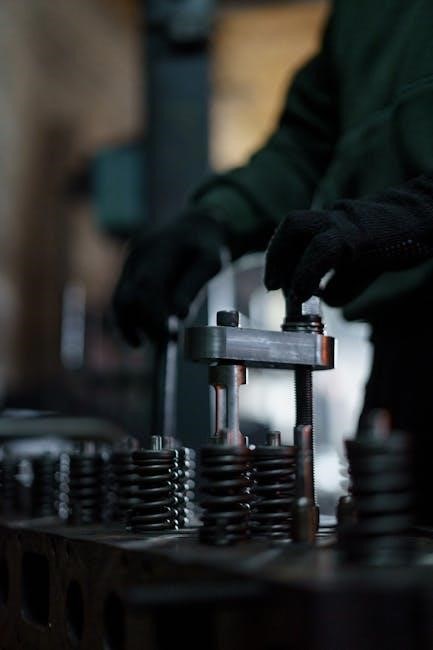
Valve construction utilizes a diverse range of materials, each offering unique properties suited for specific applications. Carbon steel remains a prevalent choice due to its strength and cost-effectiveness, frequently employed in water and oil pipelines. Stainless steel, particularly grades 304 and 316, provides exceptional corrosion resistance, making it ideal for handling aggressive chemicals and high-purity fluids.
Alloy steels, such as those containing chromium and molybdenum, enhance strength and resistance to high temperatures and pressures, commonly found in power generation and refining. Brass and bronze are favored for their corrosion resistance and suitability for potable water systems. Polymers like PTFE (Teflon) and PVC are utilized for linings and seals, offering chemical inertness and low friction.
Material selection hinges on fluid compatibility, operating conditions, and budgetary constraints, ensuring optimal valve performance and longevity. Diaphragm materials include silicone, EPDM, and Viton, each offering specific chemical and temperature resistance.
Material Selection Based on Fluid Type
Choosing the correct valve material is paramount, dictated by the fluid being handled. For water, stainless steel, brass, or bronze are excellent choices, resisting corrosion and ensuring potable water safety. Handling corrosive chemicals necessitates materials like PTFE, PVC, or specialized alloys offering chemical inertness.
Oil and gas applications often demand carbon steel or alloy steels capable of withstanding high pressures and preventing corrosion from hydrocarbons. Slurries require abrasion-resistant materials like hardened alloys or ceramic linings to prevent wear.
Steam systems benefit from materials resisting high temperatures and pressures, such as alloy steels. Compatibility charts are crucial, detailing material resistance to specific fluids, preventing degradation and ensuring long-term reliability. Careful consideration of fluid properties guarantees optimal valve performance and prevents costly failures.
Temperature and Pressure Ratings
Valve selection hinges on accurately assessing system temperature and pressure demands. Valves are rigorously tested and assigned ratings, indicating their maximum operational limits. Exceeding these limits can lead to catastrophic failure, posing safety risks and causing significant downtime.
Higher temperatures generally reduce pressure ratings; therefore, a holistic evaluation is crucial. Material choice significantly impacts these ratings – alloy steels withstand higher temperatures and pressures than plastics.
Understanding pressure classes (e.g., 150#, 300#, 600#) is essential for proper selection. Always factor in potential pressure surges or spikes, choosing a valve with a safety margin; Regularly verifying these ratings during maintenance ensures continued safe and reliable operation.

Valve Components and Accessories
Essential components include bodies, seats, and stems, while accessories like limit switches and solenoids enhance functionality and automation within valve systems.
Valve Bodies
Valve bodies represent the primary pressure-containing component, dictating the valve’s connection type and pressure-temperature capabilities. They are meticulously engineered to withstand substantial forces and ensure leak-proof operation. Common body configurations encompass straight, angle, and three-way designs, each suited for specific piping arrangements and flow paths.
Material selection for valve bodies is paramount, influenced by the fluid handled and operating conditions. Cast iron, ductile iron, carbon steel, stainless steel, and various alloys are frequently employed, offering varying levels of corrosion resistance and strength. The body’s internal design, including flow passages and seat areas, directly impacts flow characteristics and pressure drop. Furthermore, body construction methods—such as casting, forging, or fabrication—influence the body’s structural integrity and suitability for demanding applications. Proper body selection is crucial for long-term reliability and safety.
Valve Seats
Valve seats are critical components responsible for establishing a leak-tight seal when the valve is closed, preventing fluid passage. They directly contact the valve closure element – disc, ball, or plug – and endure significant wear and tear. Seat designs vary, including metal-to-metal, soft seats (using elastomers like EPDM or Viton), and specialized designs for high-temperature or corrosive services.
The material of the valve seat is carefully chosen based on fluid compatibility, temperature, and pressure requirements. Soft seats offer excellent sealing but have temperature limitations. Metal seats provide durability and high-temperature resistance but may require tighter tolerances. Seat geometry, including the sealing angle and surface finish, significantly impacts sealing performance. Regular inspection and replacement of valve seats are essential to maintain leak-free operation and prevent costly downtime.
Valve Stems
Valve stems are crucial components transmitting motion from the valve actuator (handwheel, pneumatic actuator, etc.) to the valve closure element, controlling fluid flow. They experience both axial and torsional stresses during operation and must possess sufficient strength and rigidity. Stem materials commonly include stainless steel, alloy steel, and other corrosion-resistant alloys, selected based on fluid compatibility and operating conditions.
Stem designs vary, including rising stems (visible indication of valve position) and non-rising stems. Packing around the stem prevents leakage along the valve body. Proper stem lubrication is vital for smooth operation and reduced wear. Stem threads must be carefully maintained to ensure reliable actuation. Regular inspection for corrosion, erosion, and thread damage is essential for preventing valve failure and maintaining process integrity.
Limit Switches and Solenoids
Limit switches and solenoids are essential accessories for automated valve control, providing feedback and actuation capabilities. Limit switches detect the valve’s open or closed position, sending a signal to the control system for confirmation and sequencing. They enhance safety and process reliability by verifying valve status.
Solenoids, conversely, directly actuate valves, typically in smaller sizes or for on/off control. When energized, a solenoid creates a magnetic field that moves the valve stem, opening or closing the flow path. These are frequently used in pneumatic and hydraulic valve actuation systems. Proper selection considers voltage requirements, response time, and environmental conditions. Integrating these components allows for remote control, automated shutdown systems, and precise flow management within industrial processes.
 frigidaire gallery microwave manual pdf
  alpine ktp 445u manual
  manual toro tmc 212
  honeywell jade controller manual
  manual ti 89
  minn kota i pilot manual
  healing scriptures kenneth hagin pdf
  amc past papers with answers pdf
  tv guide monroe michigan