How to Manually Lock Your Garage Door: A Comprehensive Guide

Your garage should be a secure haven, but issues arise. Doors may fail to open, or refuse to lock, creating vulnerabilities. This guide details securing your garage manually, offering peace of mind.
Understanding Garage Door Locking Mechanisms
Garage door locking mechanisms vary significantly, impacting how you manually secure your door. Traditionally, many relied solely on the automatic opener for security, a flawed approach. Modern systems incorporate physical locks, offering a crucial secondary layer of defense against intrusion. These locks aren’t always engaged automatically, necessitating manual operation.
The core principle involves preventing the door from being lifted once closed. This is achieved through various methods, including side locks that engage with the track, slide bolt locks securing the door to the frame, and deadbolt locks providing robust resistance. Understanding where and how these mechanisms function is paramount.
Automatic openers often have an emergency release cord, designed to disengage the motor for manual operation during power outages. However, this cord, if misused, can also be exploited by intruders. Therefore, knowing how to properly disengage and re-engage this cord, alongside utilizing the manual lock, is vital for comprehensive security. The interplay between the opener and the physical lock is key to a truly secure garage.
Types of Garage Doors and Their Locking Systems
Garage door types significantly influence the available manual locking options. Sectional doors, comprised of horizontal panels, commonly utilize side locks that slide into the track, preventing lifting. Roll-up doors, which curl upwards, often rely on slide bolt locks securing the door to the frame, offering a simpler, yet effective, manual locking solution.
Tilt-up doors, operating as a single panel, may feature deadbolt locks for enhanced security, though these are less common. Older doors might lack dedicated locking mechanisms altogether, relying solely on the opener – a significant security risk. Newer models increasingly integrate reinforced locking systems as standard features.
The material of the door – steel, wood, aluminum – also impacts lock compatibility. Steel doors offer the most robust support for various lock types, while wood may require specialized hardware. Understanding your door’s construction is crucial when selecting and installing a manual locking system. Always prioritize a lock compatible with your specific door type for optimal security.
Identifying Your Garage Door’s Manual Lock
Locating your garage door’s manual lock is the first step towards securing it. Begin by visually inspecting the door’s sides, near the tracks. A common side lock will appear as a metal bar or slot designed to accept a locking mechanism. Look for a pre-drilled hole or mounting point, indicating a previous or potential lock installation.
Roll-up doors typically feature a slide bolt lock mounted directly onto the door’s surface, often near the center or side. Tilt-up doors may have a deadbolt, though less frequently. If you find no visible lock, your door might lack a dedicated manual locking system, necessitating an aftermarket installation.
Consult your garage door’s manual for specific instructions and diagrams. If the manual is unavailable, search online using the door’s brand and model number. Identifying the existing locking system, or lack thereof, will guide your next steps in enhancing garage security.
Locating the Emergency Release Cord
The emergency release cord is crucial for disengaging the automatic opener, allowing manual operation. This cord is typically a red, looped handle hanging from the garage door’s trolley – the mechanism that moves the door along the tracks. It’s usually positioned near the ceiling, within reach when the door is closed.
Carefully pull the cord downwards and towards the back of the garage to disengage the opener. You’ll hear a distinct click, indicating the trolley is now free from the motor’s control. Remember, pulling this cord disables the automatic functions, requiring manual lifting and lowering of the door.

Some newer openers have a photo-eye system; ensure these aren’t blocked when attempting to use the release cord. Always exercise caution when operating the release cord, keeping hands and fingers clear of moving parts. Knowing its location is vital for safety and manual control.
Disengaging the Automatic Opener
After locating the emergency release cord, the next step is fully disengaging the automatic garage door opener. Pulling the cord separates the door from the motorized carriage, enabling manual control. This is essential when the power is out, or the opener malfunctions, preventing normal operation.
Once the cord is pulled and you hear the click, gently attempt to lift the garage door. It should move freely, though it may require some effort depending on the door’s weight and spring tension. If the door doesn’t budge, double-check the cord is fully engaged and hasn’t reconnected.
Be mindful that disengaging the opener means the door is no longer held in place by the motor. Use caution to prevent accidental slamming or uncontrolled descent. Secure the door in the open or closed position once manually adjusted, utilizing locking mechanisms discussed later in this guide.
Manually Locking a Garage Door with a Side Lock
Many garage doors feature a side lock, typically a slotted metal plate on the door’s edge, engaging with a metal bar mounted on the door frame. This provides a basic level of manual security, supplementing the automatic opener’s lock. To engage the side lock, close the garage door completely.
Locate the slot on the door’s edge and slide the metal bar into it. You should hear a distinct click as the bar secures within the slot, indicating the lock is engaged. Test the door by gently attempting to lift it; it should remain firmly in place.
However, side locks can be vulnerable if not properly maintained or if the frame is weak. Regularly inspect the lock for corrosion or damage. Consider reinforcing the frame with additional metal plating for enhanced security. Always remember a side lock is a deterrent, not an impenetrable barrier.
Using a Slide Bolt Lock
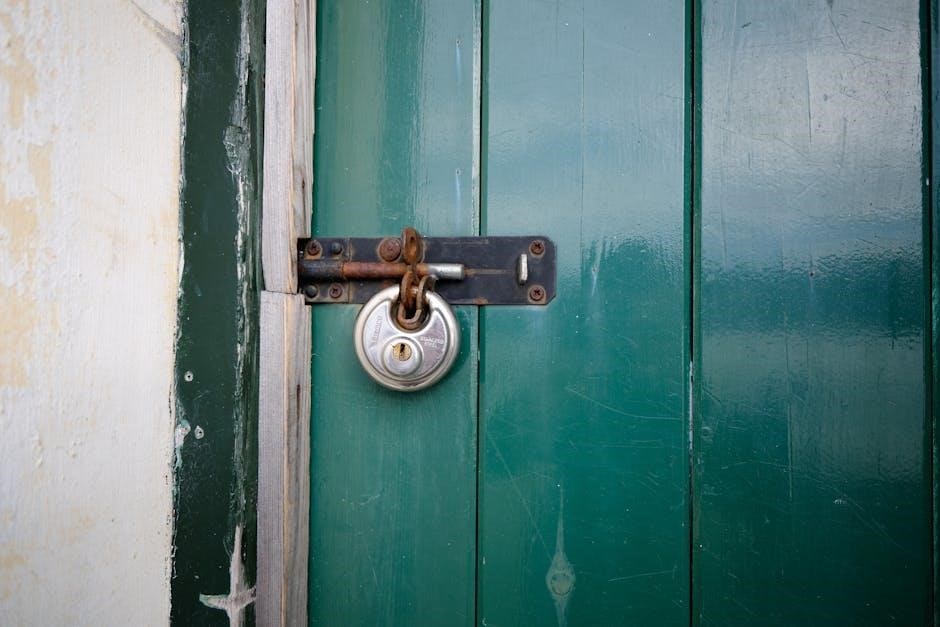
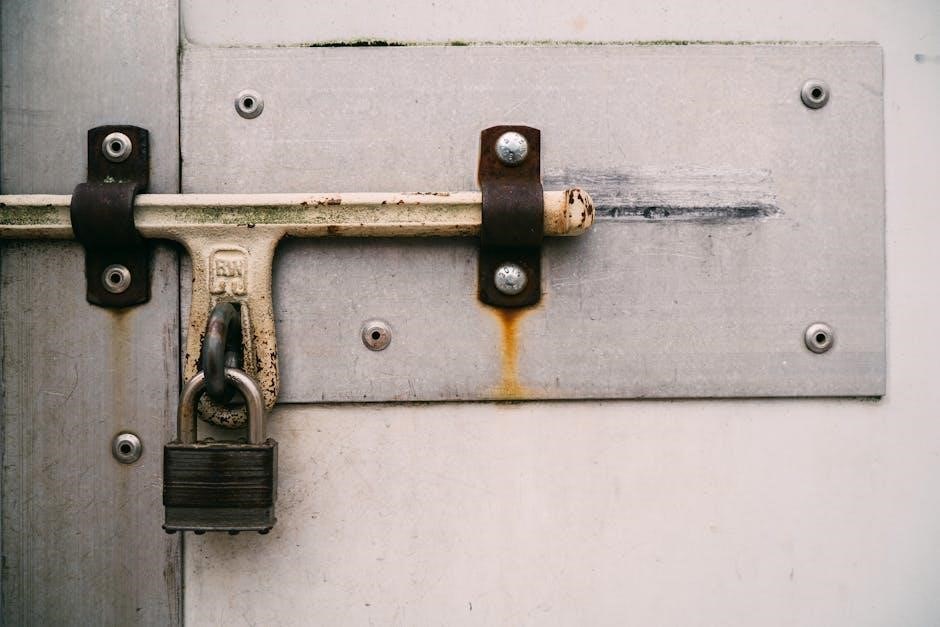
A slide bolt lock is a straightforward and effective method for manually securing your garage door. These locks are typically installed on the inside of the garage door, allowing you to physically bolt the door shut against the frame. Installation usually involves drilling holes in both the door and the door frame to accommodate the bolt.
To operate, simply slide the bolt across the door’s surface and into the corresponding hole in the frame. Ensure the bolt is fully extended and securely seated within the frame. Test the door’s stability by attempting to lift it; it should resist movement.
Slide bolt locks offer a higher level of security than some basic side locks, as they require more force to overcome. However, the effectiveness depends on the quality of the lock and the strength of the door and frame. Regular inspection and maintenance are crucial to ensure smooth operation and prevent corrosion.

Securing a Garage Door with a Deadbolt Lock
For enhanced security, consider installing a deadbolt lock on your garage door. Unlike standard latch locks, deadbolts extend a solid metal bolt deep into the door frame, making them significantly more resistant to forced entry. Installation requires precise drilling to accommodate the deadbolt mechanism and strike plate.
When choosing a deadbolt, opt for a high-quality, hardened steel model for maximum durability. Ensure the strike plate is securely mounted to the door frame with long screws that reach into the framing studs. To lock, simply turn the key or rotate the thumb turn, extending the bolt into the strike plate.
Deadbolt locks provide a substantial deterrent to intruders, offering a robust layer of protection. Regularly test the lock’s functionality and lubricate the mechanism to ensure smooth operation. Combining a deadbolt with other security measures, like a slide bolt, further strengthens your garage’s defense.
Reinforcing Existing Garage Door Locks
Often, simply reinforcing your existing garage door locks can dramatically improve security without a full replacement. A common weakness lies in the strike plates – the metal pieces the lock bolt engages with. Replace standard strike plates with heavy-duty, reinforced versions secured with longer screws.

These longer screws should penetrate the door frame and anchor into the underlying wall stud, providing a much stronger hold. Consider adding a metal reinforcement plate behind the strike plate for even greater resistance to kick-ins or prying attempts. Inspect the door itself around the lock area for any signs of weakness or rot, repairing as needed.
Strengthening the door’s core material can also help. Adding a layer of plywood or metal sheeting to the interior of the door around the lock provides extra protection. Regularly check the tightness of all screws and bolts, and lubricate the locking mechanism for smooth operation. These simple upgrades significantly bolster your garage’s security.
Adding a Garage Door Security Bar
A garage door security bar provides an excellent, visible deterrent and an additional layer of manual security. These bars typically brace against the door and the floor, preventing the door from being forced open even if the locking mechanism is compromised. Several types are available, ranging from simple metal bars to adjustable models offering greater flexibility.
When selecting a security bar, consider the height of your garage door and the material of your floor. Adjustable bars are ideal for accommodating slight variations. Ensure the bar is constructed from robust steel and features a secure locking mechanism itself. Proper installation is crucial; follow the manufacturer’s instructions carefully.

Position the bar so it effectively blocks the door’s movement and is difficult to remove quickly. Regularly inspect the bar for any signs of damage or wear. While a security bar doesn’t replace a solid lock, it adds a significant obstacle for potential intruders, enhancing overall garage security.
Garage Door Lock Installation Considerations
Before installing a new garage door lock, carefully assess your existing setup and security needs. Consider the type of garage door you have – sectional, roll-up, or tilt-up – as this impacts lock compatibility. Evaluate the door’s material; wood, steel, and aluminum require different mounting techniques.
Think about the level of security you desire. A simple slide bolt offers basic security, while a deadbolt provides greater resistance to forced entry. Ensure the lock aligns properly with the door’s strike plate for smooth operation. Check for obstructions that might interfere with the lock’s mechanism.
Prioritize quality hardware; a cheap lock is easily defeated. Consider professional installation if you’re uncomfortable with DIY projects or lack the necessary tools. Always comply with local building codes and regulations regarding security features. A well-planned installation ensures optimal protection and peace of mind.
Tools Required for Lock Installation
Successfully installing a garage door lock demands having the right tools readily available. A drill with various drill bits is essential for creating pilot holes and securing the lock components. A screwdriver set – including Phillips head and flathead – is crucial for tightening screws and adjusting the lock mechanism.
A measuring tape ensures accurate placement of the lock and strike plate. A level guarantees the lock is installed straight, preventing operational issues. Safety glasses are paramount to protect your eyes from debris during drilling. A pencil helps mark precise locations for drilling and screw placement.
Depending on the door material, you might need a hammer and chisel for creating mortises. A wrench set could be necessary for tightening bolts. Consider a stud finder to locate framing members for secure mounting. Having these tools prepared streamlines the installation process and ensures a professional result.
Preventative Maintenance for Garage Door Locks
Consistent preventative maintenance is vital for ensuring your garage door lock functions reliably and maintains security. Regularly inspecting the lock for signs of wear and tear – like rust, corrosion, or physical damage – is a crucial first step. Lubricating the locking mechanism with a silicone-based lubricant prevents stiffness and ensures smooth operation, extending its lifespan.
Periodically check the alignment of the lock and strike plate; misalignment can hinder locking and unlocking. Tighten any loose screws or bolts to maintain the lock’s structural integrity. Examine the surrounding door area for any signs of forced entry attempts or damage. Addressing minor issues promptly prevents them from escalating into major problems.
Consider a seasonal check-up, especially before and after harsh weather conditions. A well-maintained lock provides continued peace of mind and deters potential intruders. Proactive care is far more cost-effective than emergency repairs or replacements.
Lubricating Garage Door Locking Mechanisms
Proper lubrication is paramount for smooth and reliable operation of your garage door’s locking system. Avoid using oil-based lubricants, as they attract dirt and grime, ultimately hindering functionality. Instead, opt for a silicone-based spray lubricant specifically designed for garage door components. This type of lubricant won’t collect debris and provides long-lasting protection.
Begin by cleaning the lock mechanism with a clean cloth to remove any existing dirt or debris. Then, apply the lubricant directly to the keyway, bolt, and any moving parts of the lock. Work the key in and out several times to distribute the lubricant evenly. Extend lubrication to the strike plate and the surrounding door frame.
Wipe away any excess lubricant to prevent it from attracting dust. Regular lubrication – ideally every six months – ensures effortless locking and unlocking, preventing corrosion and extending the life of your garage door’s security features.
Checking for Wear and Tear on Locks
Regular inspection of your garage door locks is crucial for maintaining security. Visually examine all locking components – side locks, slide bolts, and deadbolts – for signs of rust, corrosion, or physical damage. Pay close attention to the strike plates, ensuring they are securely fastened to the door frame and haven’t become warped or misaligned.
Test the lock’s functionality by repeatedly locking and unlocking it. Note any stiffness, resistance, or difficulty in operation. Inspect the key for bends or cracks, as a damaged key can compromise the lock’s integrity. Check the bolt for smooth movement within the locking mechanism.
Look for signs of forced entry, such as scratches around the lock or damaged door frame; Address any issues promptly; a worn or damaged lock should be repaired or replaced immediately to prevent potential security breaches. Proactive maintenance safeguards your property and provides peace of mind.
Addressing Common Garage Door Lock Problems
Several issues can arise with garage door locks. A stuck lock often results from a lack of lubrication or a misaligned bolt; try applying lubricant and gently wiggling the key. Difficulty locking might indicate a warped door frame or a loose strike plate – tighten screws or consider frame adjustments.
Broken keys require lock replacement or re-keying. Damaged bolts necessitate lock disassembly and component replacement. If the lock feels loose, the mounting screws may need tightening or replacing with longer, more secure ones.
Corrosion, especially in humid climates, can seize locking mechanisms; regular cleaning and lubrication are vital. Stripped screws in the strike plate require replacement with appropriately sized screws. When encountering persistent problems, or if you’re uncomfortable with repairs, consulting a professional garage door technician is recommended to ensure proper diagnosis and resolution.

Troubleshooting a Stuck Garage Door Lock
When your garage door lock jams, initial steps involve gentle manipulation. Avoid forcing the key, as this can cause breakage. First, try lubricating the lock cylinder with a graphite-based lubricant or silicone spray – avoid oil-based products that attract dirt. Simultaneously, wiggle the key gently while applying slight pressure.
If lubrication doesn’t work, inspect the strike plate alignment. A misaligned plate can bind the bolt. Loosen the screws and adjust the plate until it aligns smoothly with the bolt. Check for physical obstructions like debris or ice within the lock mechanism.
A frozen lock in cold weather may require a de-icer spray specifically designed for locks. If the key is broken inside the lock, attempting removal with tweezers or a specialized key extractor is possible, but professional assistance is often necessary. Persistent issues suggest a deeper problem requiring a qualified technician.
When to Call a Professional Garage Door Technician
While many garage door lock issues are DIY-fixable, certain situations demand professional intervention. If you’ve attempted troubleshooting – lubrication, alignment adjustments – and the lock remains stubbornly stuck, it’s time to call an expert. Similarly, a broken key lodged within the lock, especially if you’ve failed to extract it safely, necessitates a technician’s skills.
Significant damage to the lock mechanism, strike plate, or surrounding door frame requires professional repair or replacement. Don’t attempt complex repairs yourself, as improper handling can compromise the door’s security and functionality. If you suspect internal damage within the locking system, a technician can diagnose and resolve the issue accurately.
Furthermore, if your garage door exhibits related problems – difficulty opening or closing, unusual noises – alongside the lock issue, a comprehensive inspection by a professional is crucial. They can identify interconnected problems and ensure your entire garage door system operates safely and securely.

Garage Door Security Best Practices
Beyond manually locking your garage door, proactive security measures significantly enhance protection. Regularly inspect your door for signs of tampering or weakness, addressing any issues promptly. Consider installing motion-sensor lights around your garage to deter potential intruders, illuminating the area and increasing visibility.
Reinforce your garage door with additional security features like a garage door security bar, providing a physical barrier against forced entry. Avoid leaving your garage door opener visible inside your vehicle; store it securely. Be mindful of sharing your garage door code, limiting access to trusted individuals only.
Trim landscaping around your garage to eliminate hiding spots for intruders. If you’re away for an extended period, ask a neighbor to periodically check on your garage and collect any mail or packages. Finally, remember that a visible security system, even a dummy one, can act as a deterrent, enhancing your overall garage security.
 amc past papers with answers pdf
  tv guide near coffs harbour nsw
  arlec grid connect panel heater manual
  public housing waiting list areas wa pdf
  4baby co sleeper instructions pdf
  hospitality general award pay guide
  how to manually lock garage door
  mjjc foam cannon instructions pdf free download
  bat buying guide
  healing scriptures kenneth hagin pdf